
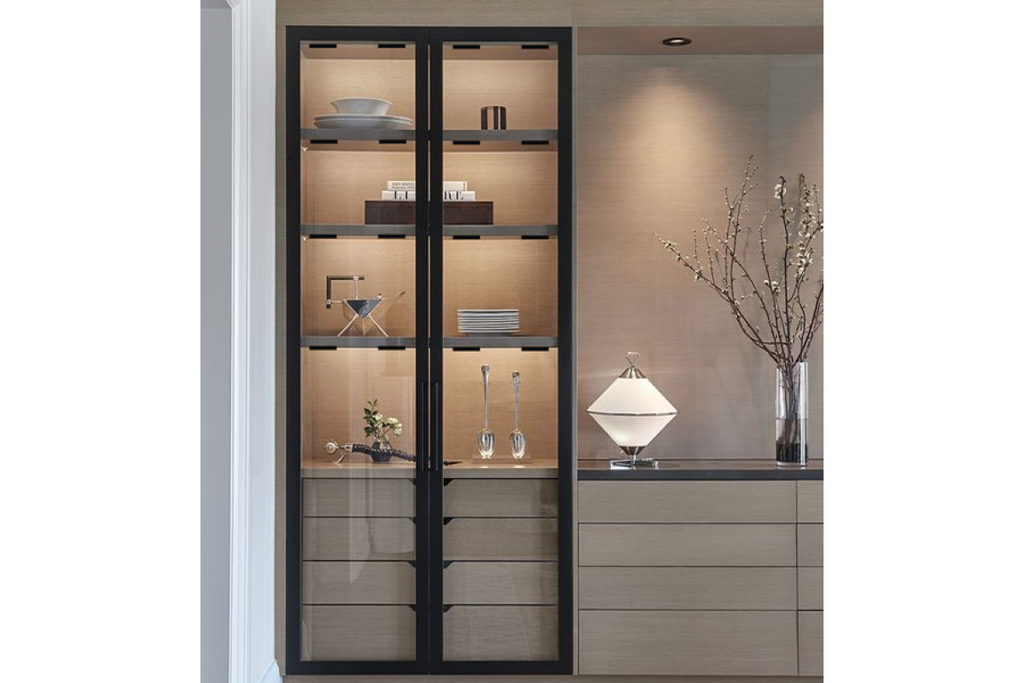
Decide what the shelf lighting should accomplish
Shelf illumination can help users find everyday objects, highlight a collection or reveal the depth of a furniture niche. These functions need distinct beam directions and brightness levels. A kitchen shelf above a worktop calls for useful downlight, while a display shelf may benefit from light grazing a textured back panel. Mark the primary object or surface that needs light before choosing the fixture, and avoid positioning light solely according to the appearance of the empty shelf.
Front and rear positions behave differently
Mounting a light close to the front underside of a shelf sends illumination toward items and work surfaces below. Installing it near the back tends to brighten the rear wall and leave the foremost objects in softer light. Both arrangements are useful, but the choice changes how shadows fall. In a deep bookcase, front-mounted lighting often improves visibility of book titles, while rear-mounted accent light gives decorative shelving a sense of depth.
Build consistent rhythms across several shelves
Rows of shelves look more deliberate when illuminated elements align. Set a common distance from the front edge and maintain the same visible setback on each level. Furniture Shelf Lighting is one product category to compare against these installation requirements. If shelf widths differ, decide whether every compartment needs an individual light or whether selected compartments will carry the visual emphasis.
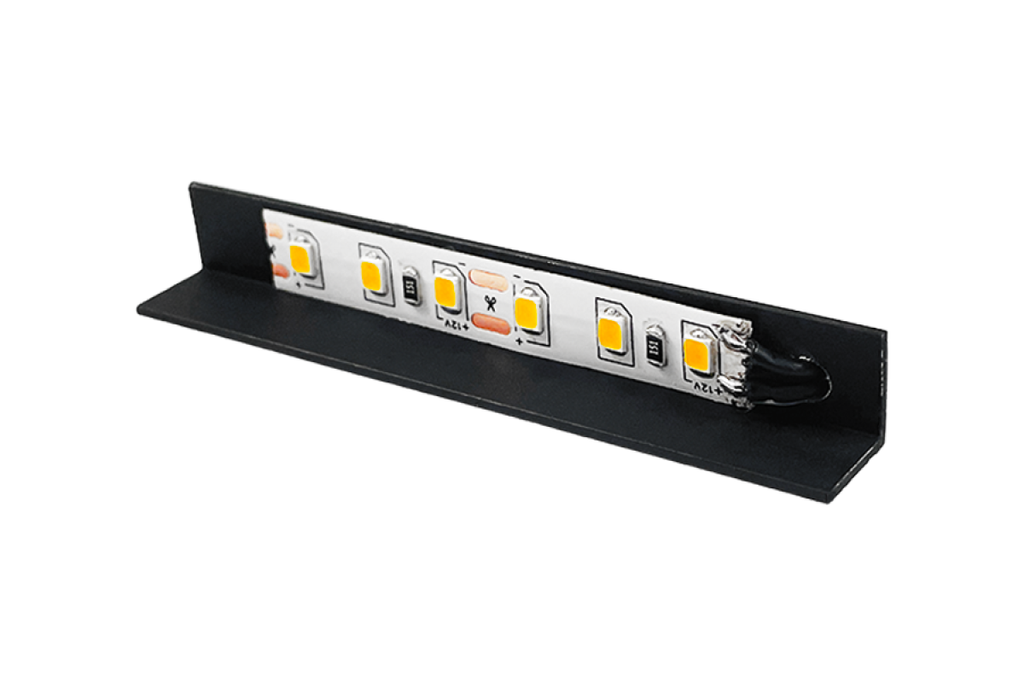
Varying brightness arbitrarily between otherwise identical shelves creates a patchy appearance, especially when the furniture is viewed from across a room.
Consider the objects and materials
Dark timber absorbs more light than pale laminate, so equal-output fittings may appear less bright in different cabinets. Glass objects create reflections, and polished metal can reveal the location of every light source. Food packaging, books and fabrics benefit from illumination that shows surface colours naturally. Select the light distribution and colour temperature around the actual collection rather than judging an empty showroom display.
Keep lights out of normal sightlines
A bright strip or exposed diode under a shelf can be distracting when seen from a seated position. Consider the typical eye level of people using the room. A recessed channel, small fascia or appropriately diffused luminaire can conceal direct glare without obstructing useful light. Test sightlines across the entire cabinet, including reflections in glossy backs or glass doors, before permanent fixing.
Plan wiring before assembling the furniture
A shared vertical cable chase at the rear of the unit can feed several illuminated levels while keeping leads hidden. Drill positions should account for the shelf thickness and the location of supports. Provide enough cable for a shelf to be removed if the design requires it. Group the circuits logically, especially when some shelves function as work lighting and others are switched only for decoration.
Select controls according to daily use
Display shelves may stay illuminated for several evening hours, while utility shelves are used for short periods. A wall switch or dimmer gives straightforward control; a door sensor is useful inside a closed cabinet. Multiple lighting zones let homeowners create atmosphere without lighting every compartment. Keep controls accessible and explain them clearly to anyone who will use or maintain the furniture.
Test the lighting with the shelves loaded
Shelf brackets, books and displayed merchandise affect shadows after installation. Build a trial using representative objects and assess the result under normal room lighting. Look for uneven bright patches, distracting reflections and dark vertical gaps between shelf compartments. If a continuous line is required, check diffuser quality and spacing of light sources rather than simply increasing wattage.
Treat shelf lighting as a furniture detail
Furniture Shelf Lighting offers a relevant starting point for selecting fixtures intended for cabinets, shelves and display units. Match the exact model to the panel dimensions, electrical supply and desired beam. Careful positioning, repeatable installation measurements and concealed wiring produce a result that belongs to the furniture instead of looking like an accessory added afterwards.
Example: lighting a home library
A floor-to-ceiling library combines shelves at several viewing heights, and the lighting cannot be positioned identically by intuition alone. The upper shelves may be seen from below while the central shelves sit close to eye level. The design begins with a marked cabinet elevation showing typical book heights and the front edge of each shelf. A sample luminaire under a central shelf is tested with books of different colours and sizes. The installer then checks whether the next shelf casts shadows across book spines. A shared concealed cable chase reduces visible wiring, while separate zones allow display sections to remain dimmer than the everyday reading area. The best result makes titles legible and gives the shelving an ordered appearance.
Example: a kitchen shelf over a preparation zone
An open kitchen shelf positioned above a worktop needs lighting that supports food preparation while preserving the light appearance of the furniture. Begin by identifying the actual cutting, mixing and washing zones. Locate the luminaire so the user does not block the beam when working directly below it. Check how a metal extractor, a glazed splashback and glossy tiles affect reflections. A lighting test with cookware and utensils in place reveals whether the back of the worktop is too bright and the front is too dark. The power cable should follow a concealed path protected from heat and moisture according to the product installation requirements. The chosen solution needs to remain practical during cleaning.
A final evaluation after installation
Lighting should be judged at the times when a room is normally used, not only immediately after it is installed. In daylight, the fixtures may contribute little to the appearance of a display; after sunset their reflections and shadows become more apparent. Visit the cabinet from several viewpoints, including seated positions. Compare the colour of illuminated objects with the rest of the room and adjust dimming if available. Check whether tall objects conceal the beam from shorter items. Confirm that users can operate the lighting without moving heavy decorations, and leave access to junctions. These small checks help preserve both the practical and visual purpose of illuminated shelving.
For related furniture and architectural lighting components, the LEDUA catalogue offers a wider range of fittings, electrical accessories and installation options. Select each component from its actual technical documentation and coordinate the complete assembly before installation.



More Stories
Why Ipe Hardwood Siding Is a Smart Choice for Premium Exterior Design
The Engineer’s Guide to Specifying Chemical Processing Equipment for Highly Corrosive Environments
Expert Tips from Patio Enclosure Companies Near Me to Maximize Your Patio Space